

A Beginner’s Guide to Automated Pipe Cutting Solutions
Introduction
Pipe cutting is a fundamental process across industries such as oil and gas, construction, automotive, furniture manufacturing, and heavy engineering. Traditionally, pipe cutting relied on manual or semi-automatic methods that were time-consuming, labor-intensive, and prone to inconsistency. As manufacturing standards continue to rise, companies are increasingly adopting automated pipe cutting solutions to improve precision, productivity, and safety.
For beginners, understanding automated pipe cutting technology can feel complex. This guide explains the basics, benefits, working principles, and applications of automated pipe cutting systems—helping manufacturers make informed decisions as they move toward smarter production.
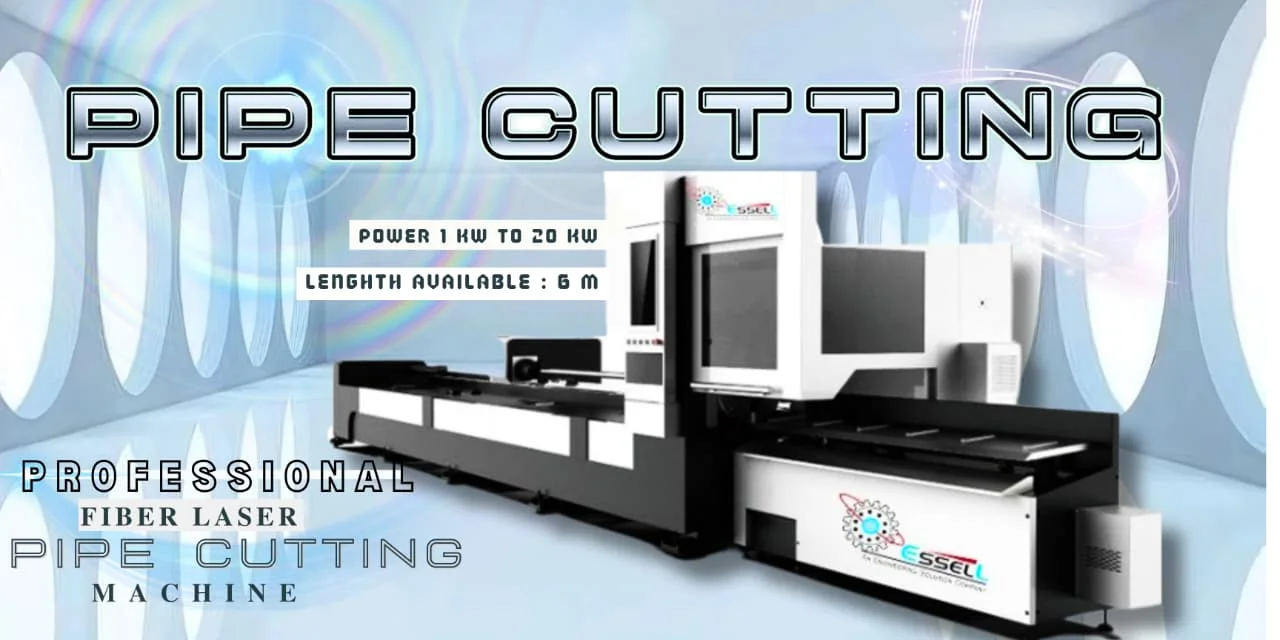
What Are Automated Pipe Cutting Solutions?
Automated pipe cutting solutions are machine-based systems designed to cut pipes and tubes with minimal human intervention. These systems use advanced technologies such as CNC controls, laser cutting, plasma cutting, or mechanical cutting tools to deliver accurate and repeatable results.
Unlike manual cutting, automated systems rely on programmed instructions, ensuring uniform cuts across large production volumes. They are ideal for industries that require high precision, speed, and consistent quality.
Why Automation Is Important in Pipe Cutting
Automation has become essential due to increasing demands for efficiency, accuracy, and cost optimization.
Key Challenges with Manual Pipe Cutting:
- Inconsistent cut quality
- Higher material wastage
- Increased labor dependency
- Safety risks for operators
- Slower production cycles
Automated pipe cutting addresses these challenges by offering controlled, repeatable, and safe cutting operations.
Types of Automated Pipe Cutting Technologies
1. CNC Pipe Cutting Machines
CNC pipe cutting machines use computer numerical control to automate cutting operations. They allow precise control over cutting length, angle, and speed.
Best for:
- Medium to high-volume production
- Repetitive cutting jobs
- Steel, stainless steel, and aluminum pipes
2. Laser Pipe Cutting Systems
Laser pipe cutting is one of the most advanced automated solutions available today. It uses a focused laser beam to cut pipes with extreme precision.
Key Benefits:
- Clean, burr-free cuts
- High-speed operation
- Ability to cut complex shapes and profiles
Best for:
- Precision manufacturing
- Automotive and furniture industries
- Thin to medium wall pipes
3. Plasma Pipe Cutting Systems
Plasma pipe cutting uses ionized gas to cut electrically conductive materials. It is known for speed and power.
Best for:
- Thick metal pipes
- Heavy-duty industrial applications
- Structural fabrication
4. Mechanical Automated Pipe Cutting Machines
These systems use rotating blades or saws controlled by automated feeds.
Best for:
- Simple straight cuts
- Cost-sensitive operations
- Smaller workshops transitioning to automation
How Automated Pipe Cutting Solutions Work
The basic working process includes:
- Material Loading – Pipes are loaded manually or through automated loaders
- Programming – Cutting parameters are set via CNC or control software
- Positioning & Clamping – Pipes are securely held in place
- Automated Cutting – The machine performs cutting with high precision
- Unloading & Inspection – Finished pipes are collected for further processing
This streamlined workflow significantly reduces manual handling and errors.

Key Benefits of Automated Pipe Cutting Solutions
1. Improved Accuracy and Consistency
Automation ensures precise cuts every time, reducing rework and scrap.
2. Higher Productivity
Automated systems operate faster and can run continuously, increasing output.
3. Reduced Material Waste
Accurate programming minimizes cutting errors and optimizes material usage.
4. Enhanced Worker Safety
Reduced manual intervention lowers the risk of injuries and accidents.
5. Lower Long-Term Costs
Although the initial investment may be higher, automation reduces labor costs and improves ROI over time.
Applications of Automated Pipe Cutting
Automated pipe cutting solutions are widely used across industries:
- Automotive exhaust and chassis manufacturing
- Furniture and metal fabrication
- Construction and infrastructure projects
- Oil and gas pipelines
- HVAC and structural engineering
Their flexibility makes them suitable for both mass production and custom fabrication.
Factors to Consider When Choosing an Automated Pipe Cutting System
For beginners, selecting the right system depends on several factors:
- Material type and thickness
- Production volume requirements
- Level of precision needed
- Available floor space
- Budget and long-term scalability
Understanding these factors helps businesses choose solutions that align with current needs and future growth.
The Role of Automation in Modern Manufacturing
Automated pipe cutting is a key component of smart manufacturing and Industry 4.0. Modern systems can integrate with production lines, ERP software, and robotic handling systems, enabling real-time monitoring and data-driven decision-making.
Manufacturers adopting automation gain a competitive edge through faster delivery, consistent quality, and operational efficiency.
Essell’s Approach to Automated Pipe Cutting Solutions
At Essell, we focus on delivering advanced automated pipe cutting solutions designed for precision, reliability, and scalability. Our systems are engineered to meet diverse industrial requirements while ensuring ease of operation and long-term performance.
By combining innovation with industry expertise, Essell helps manufacturers transition smoothly from manual processes to efficient automated production.
Conclusion
Automated pipe cutting solutions are transforming the way industries approach metal fabrication. For beginners, understanding the technology, benefits, and applications is the first step toward smarter manufacturing.
By investing in automation, businesses can improve quality, enhance safety, reduce costs, and prepare for future production demands. With the right solution, automated pipe cutting becomes a powerful driver of efficiency and growth.