

Top Features to Look for in Commercial CNC Bending Machine
In today’s precision-driven manufacturing environment, CNC bending machines play a vital role in shaping metal components with accuracy and consistency. Industries such as automotive, construction, electrical enclosures, and heavy engineering rely heavily on these machines to maintain production quality and efficiency.
However, selecting the right CNC bending machine requires more than just comparing prices. It involves evaluating technical capabilities, performance features, and long-term operational value. Understanding the top features to look for in a commercial CNC bending machine can help businesses make a smart and future-ready investment.
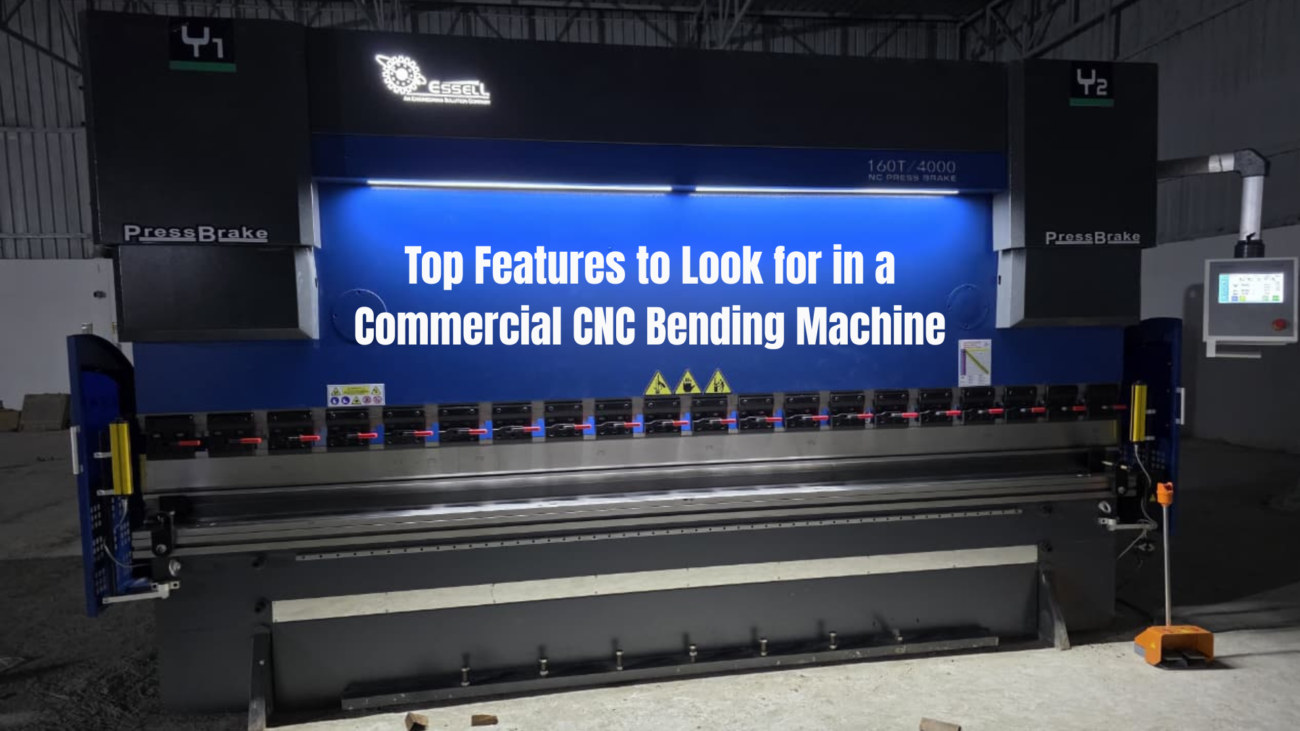
1. Advanced CNC Control System
Essential Considerations: Top Features to Look for in Commercial CNC Bending Machine
The control system is the brain of any CNC bending machine. A high-quality CNC controller ensures precise bending operations, repeatability, and ease of use.
Modern systems offer:
- Intuitive touchscreen interfaces
- Multi-axis control for complex bends
- Real-time data monitoring
- Program storage and automation
An advanced control unit allows operators to execute complex bending tasks with minimal manual intervention, improving both accuracy and productivity.
2. High Precision and Repeatability
Accuracy is a fundamental requirement in metal bending applications. Even small deviations can lead to product rejection or assembly issues.
When evaluating a machine, consider:
- Positioning accuracy of back gauges
- Consistency across repeated cycles
- Stability under continuous operation
A machine that maintains tight tolerances ensures uniform output and reduces material wastage.
3. Robust Machine Structure
The structural strength of a CNC bending machine directly affects its performance and lifespan. A rigid frame minimizes vibration and deformation during operation.
Key structural features include:
- Heavy-duty steel construction
- Stress-relieved machine frame
- High-quality linear guides
A solid build ensures consistent bending angles and reliable long-term performance, even under demanding workloads.
4. Back Gauge System Efficiency
The back gauge system is responsible for positioning the workpiece accurately before bending. Its performance significantly impacts precision and production speed.
Look for:
- Multi-axis back gauge movement
- Fast positioning speed
- High repeat accuracy
- Programmable positioning
An efficient back gauge system enhances automation and reduces manual adjustments.
5. Bending Force and Capacity
Different applications require varying levels of bending force. The machine’s tonnage capacity determines the thickness and type of material it can handle.
Before investing, evaluate:
- Maximum bending force (tonnage)
- Material thickness capability
- Working length
Choosing the right capacity ensures that the machine can meet both current and future production requirements.
6. Tooling Flexibility and Compatibility
Tooling plays a crucial role in achieving desired bending results. A good CNC bending machine should support a wide range of tooling options.
Important considerations include:
- Compatibility with standard tooling systems
- Quick tool change mechanisms
- Availability of custom tooling
Flexible tooling options allow manufacturers to handle diverse bending applications efficiently.
7. Automation and Productivity Features
Modern CNC bending machines are designed to improve production efficiency through automation.
Key automation features may include:
- Automatic tool setup
- CNC-controlled crowning systems
- Programmed bending sequences
- Integration with robotic systems
Automation reduces operator dependency and increases output consistency.
8. Energy Efficiency and Hydraulic Performance
Energy consumption is an important consideration for long-term cost management. Efficient hydraulic or servo-electric systems can significantly reduce power usage.
Look for machines that offer:
- Optimized hydraulic systems
- Servo-driven technology
- Reduced idle power consumption
An energy-efficient system contributes to lower operating expenses and sustainable manufacturing practices.

9. Safety Systems and Operator Protection
Safety is a critical aspect of any industrial machinery. CNC bending machines should include advanced safety features to protect operators.
Essential safety features include:
- Light curtains or laser guards
- Emergency stop systems
- Overload protection
- Safety interlocks
A machine with proper safety mechanisms ensures compliance with industrial standards and reduces workplace risks.
10. Software Integration and Ease of Programming
Modern manufacturing relies heavily on software-driven processes. A CNC bending machine should support easy programming and integration with design tools.
Key software capabilities include:
- Offline programming options
- 3D simulation of bending sequences
- Error detection and correction
- Compatibility with CAD systems
Efficient software simplifies operation, reduces setup time, and improves overall workflow efficiency.
11. After-Sales Support and Service Reliability
Even the most advanced machine requires support and maintenance over time. Choosing a manufacturer that provides strong after-sales service is essential.
Reliable support includes:
- Installation and commissioning
- Operator training
- Technical assistance
- Spare parts availability
A dependable service network ensures smooth operations and minimizes downtime.
Why Choose Essell CNC Bending Machine
At Essell.co, CNC bending machines are designed with a focus on precision engineering, advanced technology, and long-term reliability. Each system is built to meet the evolving needs of modern manufacturing industries.
Essell offers:
- High-performance CNC systems
- Robust machine construction
- Efficient and reliable operation
- Dedicated technical support
By combining innovation with customer-focused solutions, Essell helps businesses enhance productivity and achieve consistent manufacturing excellence.
Conclusion
Investing in a commercial CNC bending machine is a strategic decision that directly impacts production quality and efficiency. By focusing on critical features such as control systems, precision, structural strength, automation, and energy efficiency, businesses can select machines that deliver long-term value.
Understanding these top features to look for in a commercial CNC bending machine ensures that your investment supports both current production needs and future growth.
With the right technology partner like Essell, manufacturers can confidently adopt advanced bending solutions that drive performance and profitability.