

Future trends in Laser cutting and engraving industry (2026 outlook)
The laser cutting and engraving industry is entering a new phase of innovation, driven by automation, precision engineering, and evolving industrial demands. As industries shift toward smarter manufacturing and sustainable practices, laser technologies are becoming more advanced, efficient, and adaptable.
For companies like essell, staying aligned with these emerging trends is essential to delivering high-performance engineering solutions and maintaining a competitive edge in the market.
This article explores the key future trends shaping the laser cutting and engraving industry in 2026 and beyond.
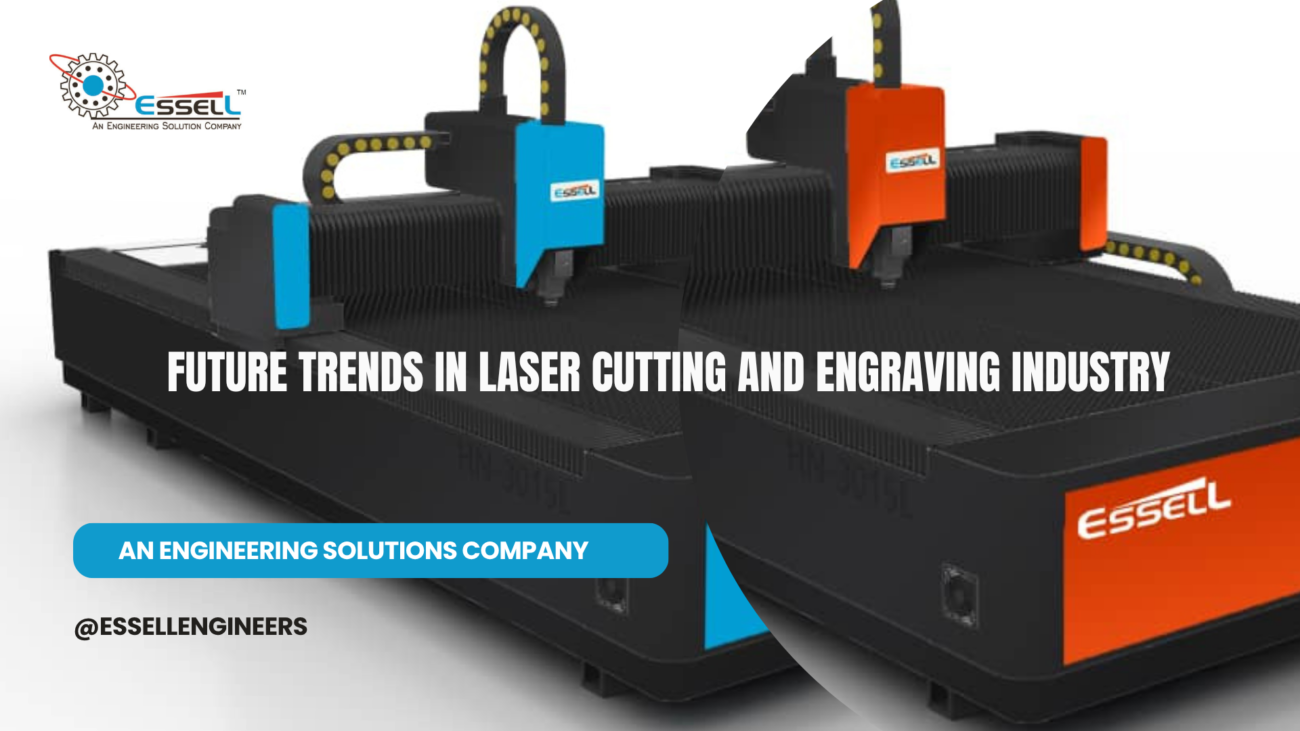
rising demand for smart laser systems
One of the most significant shifts in the industry is the move toward intelligent laser systems. Modern machines are no longer just tools—they are integrated with software and data analytics to optimize performance.
Smart laser systems can:
- automatically adjust cutting parameters
- detect errors in real time
- improve overall process efficiency
This level of intelligence reduces manual intervention and enhances productivity, making it a valuable investment for forward-thinking companies like essell.
integration with industry 4.0
Industry 4.0 is transforming manufacturing, and laser technology is a key part of this evolution.
Laser systems are now being integrated with:
- iot-enabled devices
- cloud-based monitoring platforms
- advanced production management software
This connectivity allows manufacturers to monitor operations remotely, analyze data, and make informed decisions to improve efficiency and output quality.
growth of fiber laser technology
fiber lasers continue to dominate the market due to their efficiency and versatility. future developments are focused on making these systems even more powerful and cost-effective.
expected advancements include:
- higher power outputs for faster cutting
- improved beam quality for precision tasks
- enhanced durability and lifespan
for essell, investing in next-generation fiber laser systems can unlock new opportunities in metal fabrication and engraving.
expansion of ultrafast laser applications
ultrafast lasers, such as femtosecond and picosecond systems, are gaining traction in industries that require extreme precision.
these lasers are capable of:
- producing micro-level details
- minimizing heat impact on materials
- processing delicate components
they are particularly useful in electronics, medical devices, and aerospace applications, where accuracy is critical.
increased automation and robotics
automation is becoming a standard feature in laser cutting and engraving processes.
modern systems are increasingly paired with:
- robotic arms for material handling
- automated loading and unloading systems
- fully integrated production lines
this reduces labor dependency and ensures consistent output, especially in high-volume manufacturing environments.

focus on energy efficiency and sustainability
sustainability is no longer optional—it is a priority for modern industries.
laser technologies are evolving to:
- consume less energy
- reduce material waste
- eliminate the need for harmful chemicals
these improvements not only lower operational costs but also support environmentally responsible manufacturing practices.
customization and flexible manufacturing
the demand for customized products is increasing across industries. laser cutting and engraving systems are adapting to this trend by offering greater flexibility.
future systems will:
- support rapid design changes
- handle small batch production efficiently
- enable complex and personalized designs
this flexibility allows companies like essell to meet diverse customer requirements without compromising efficiency.
advanced software and user interfaces
software plays a crucial role in the performance of laser systems. future developments are focused on improving usability and control.
modern laser software offers:
- intuitive user interfaces
- real-time simulation and preview
- seamless integration with cad/cam tools
these features simplify operations and reduce the learning curve for operators.
improved material compatibility
as industries explore new materials, laser technologies are evolving to handle a wider range of substrates.
future laser systems will be capable of:
- processing advanced alloys
- working with composite materials
- handling reflective and delicate surfaces
this expanded compatibility opens new possibilities for innovation in manufacturing.
enhanced safety features
with increasing automation and power, safety remains a critical concern.
future laser systems will include:
- advanced safety sensors
- automated shutdown mechanisms
- improved shielding and protection systems
these features ensure a safer working environment while maintaining high productivity.
data-driven optimization and ai integration
artificial intelligence is set to play a major role in the future of laser technology.
ai-powered systems can:
- analyze cutting patterns
- optimize machine performance
- predict maintenance needs
this data-driven approach helps reduce downtime and improves overall efficiency.
conclusion
the laser cutting and engraving industry is evolving rapidly, driven by advancements in automation, intelligence, and sustainability. from smart systems and ai integration to ultrafast lasers and flexible manufacturing, the future holds immense potential.
for essell, embracing these trends is key to delivering innovative engineering solutions that meet the demands of modern industries. by staying ahead of technological developments, businesses can improve efficiency, reduce costs, and maintain a strong competitive position.
as we move into the future, laser technology will continue to redefine manufacturing, making it smarter, faster, and more precise than ever before.