

CNC/NC Pipe Bending Machine in Burari
Burari is a developing area of North Delhi with connections to surrounding commercial, engineering, fabrication, and industrial zones. Businesses operating in and around Burari may be involved in metal fabrication, engineering, machinery, construction, electrical equipment, industrial maintenance, and general manufacturing.
Pipes and tubes are used in machine frames, equipment structures, supports, guards, mechanical assemblies, and customised fabricated components. For businesses that regularly require bent tubular parts, a CNC/NC Pipe Bending Machine in Burari can provide a controlled and repeatable method for producing pipe and tube bends.
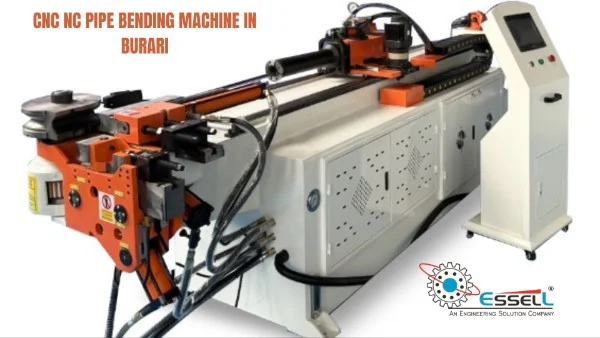
What Is a CNC/NC Pipe Bending Machine?
A CNC/NC pipe bending machine is industrial equipment designed to bend pipes and tubes according to specified angles, dimensions, bending radii, and production parameters.
Depending on the machine configuration, predefined or programmable settings can be used to control the bending operation. This can be useful for manufacturers and fabricators producing repeated tubular components with consistent bend geometry.
Why Pipe Bending Matters for Burari Businesses
Businesses involved in fabrication, engineering, machinery, construction, and industrial production may require pipes and tubes in different forms and configurations.
A suitable CNC/NC pipe bending machine can help businesses work toward:
- Consistent bending across production batches
- Improved repeatability between components
- Reduced repetitive manual bending
- Better control over bending parameters
- More organised fabrication workflows
- Greater uniformity in tubular components
- Efficient processing of recurring pipe bending jobs
Actual results depend on machine configuration, tooling, pipe material, dimensions, and application.
Applications of CNC/NC Pipe Bending Machines in Burari
Engineering & Fabrication
Engineering workshops and fabrication businesses can use bent pipes and tubes for machine frames, structures, supports, guards, assemblies, and customised industrial products.
Machinery Manufacturing
Machinery manufacturers can incorporate bent tubes into equipment structures, machine frames, supports, assemblies, and protective components.
Construction & Infrastructure
Construction-related fabrication can require tubular structures, frames, supports, and customised components with defined bending dimensions.
Electrical Equipment
Manufacturers of electrical and industrial equipment can use bent tubes for equipment frames, supports, protective structures, and fabricated assemblies.
Automotive Components
Automotive-related businesses may require bent tubular parts for frames, supports, mechanical assemblies, and customised components.
Metalworking
Metalworking businesses can use CNC/NC pipe bending technology for recurring tubular components where controlled and repeatable bending is required.
Industrial Equipment
Equipment manufacturers can use bent pipes for machine structures, support assemblies, guards, frames, and customised industrial products.
General Manufacturing
Businesses regularly processing pipes and tubes can evaluate CNC/NC bending technology according to their material, dimensions, component geometry, and production volume.
Benefits of Using a CNC/NC Pipe Bending Machine
Consistent Bending
Controlled machine parameters can help produce similar bend geometry across repeated components.
Improved Repeatability
Repeatable settings can support greater uniformity during batch production.
Reduced Manual Operations
For suitable applications, machine-based bending can reduce repetitive manual bending work.
Better Process Control
A defined bending process can make recurring fabrication operations more systematic.
Efficient Production Workflow
Pipe bending can be integrated with cutting, welding, assembly, finishing, and inspection as part of a structured manufacturing process.
How to Choose the Right Pipe Bending Machine in Burari
Before selecting a machine, businesses should evaluate their actual component and production requirements.
Consider:
- Pipe diameter: Determine the complete range of pipe sizes required.
- Material: Consider MS, stainless steel, aluminium, and other materials.
- Wall thickness: Identify the thickness range involved.
- Bending radius: Establish the required radius for finished components.
- Bending angle: Determine the range of angles required.
- Component geometry: Consider the number, position, and sequence of bends.
- Production volume: Match machine capabilities with expected workload.
- Tooling: Ensure suitable tooling is available for the required pipe dimensions and material.
- Automation: Select the appropriate level of machine control for your production workflow.
Application-specific evaluation is important because different pipe sizes, materials, and component designs can require different machine configurations.

CNC/NC Pipe Bending Machine for Burari Manufacturers
Pipe bending is generally one stage of a broader manufacturing process. Depending on the product, the workflow may include pipe cutting, bending, welding, assembly, finishing, and inspection.
For manufacturers producing similar pipe and tube components regularly, a suitable CNC/NC pipe bending machine can help establish a more controlled and repeatable bending process.
CNC/NC Pipe Bending Machine Near Burari
Businesses operating in and around Burari, Wazirabad, Mukundpur, Jahangirpuri, Samaypur Badli, Narela, and other nearby North Delhi industrial locations may have different pipe bending requirements based on their products and production volumes.
Applications can range from engineering fabrication and machinery manufacturing to construction, electrical equipment, automotive components, industrial structures, and customised tubular products.
The appropriate machine configuration should be determined by the specific pipe material, diameter, wall thickness, bending radius, component geometry, tooling, and production requirements.
Why Choose ESSELL?
ESSELL – Engineering Solutions Company provides industrial machinery solutions for manufacturing and fabrication businesses.
We understand that every pipe bending application can have different requirements. Factors such as pipe material, diameter, wall thickness, bending radius, component geometry, production volume, tooling, and automation can influence machine selection.
Our approach is to understand the customer’s manufacturing requirement and help identify an engineering solution aligned with the application.
Conclusion
A CNC/NC Pipe Bending Machine in Burari can help suitable manufacturers and fabrication businesses improve consistency, repeatability, and process control when producing pipe and tube components.
The technology can support applications across engineering, machinery manufacturing, construction, automotive components, electrical equipment, metalworking, industrial fabrication, and general manufacturing.
Before selecting a machine, evaluate pipe diameter, material, wall thickness, bending radius, bending angle, component geometry, tooling, and production volume to determine the appropriate configuration.
Looking for a CNC/NC Pipe Bending Machine in Burari?
Whether you operate an engineering workshop, fabrication unit, machinery manufacturing facility, automotive component business, electrical equipment unit, or another industrial setup, ESSELL – Engineering Solutions Company can help you explore a suitable pipe bending solution.
Contact ESSELL today to discuss your pipe and tube bending requirements and find the right CNC/NC Pipe Bending Machine for your business in Burari.