
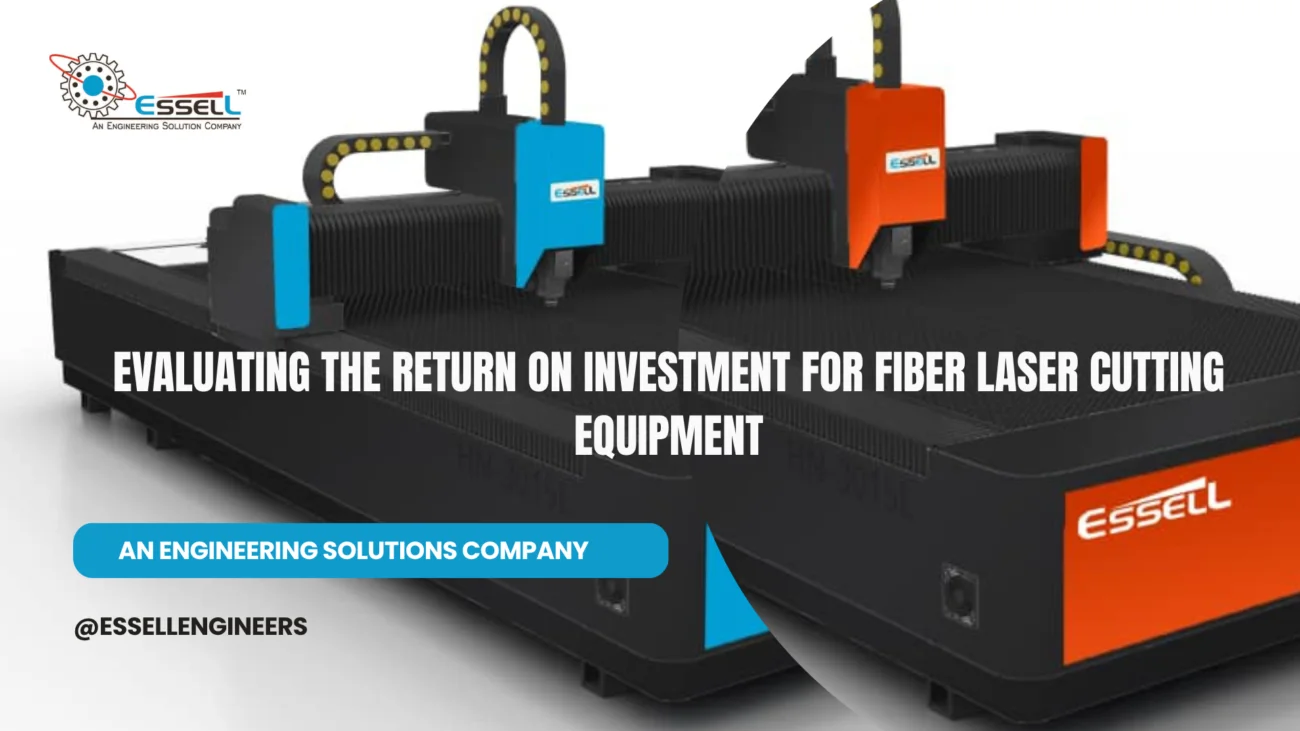
Evaluating the return on investment for fiber laser cutting equipment (2026 guide)
Investing in fiber laser cutting equipment is a major decision for any manufacturing business. Although the initial expense may be high, the long-term returns can deliver greater financial value. Understanding the return on investment (roi) is essential for making informed decisions and ensuring sustainable growth.
For Essell, helping businesses maximize value from advanced laser solutions means providing not just machines, but long-term performance and efficiency. This guide explains how to evaluate roi for fiber laser cutting equipment and what factors influence profitability.
What does roi mean in laser cutting equipment?
Return on investment refers to the financial gains a business achieves compared to the cost of acquiring and operating equipment.
In the context of fiber laser machines, roi includes:
- increased production output
- reduced operational expenses
- improved product quality
- lower maintenance costs
A carefully considered investment ensures the equipment gradually delivers value that balances its original cost
initial investment vs long-term value
Many businesses focus only on the purchase price, but this does not provide a complete picture.
Key cost components include:
- machine purchase cost
- installation and setup
- training and integration
- operating expenses
However, the real value lies in long-term benefits such as efficiency, reliability, and scalability.
increased productivity and faster output
These machines are engineered to handle cutting tasks with speed and precision
This leads to:
- shorter production cycles
- higher output capacity
- ability to handle larger orders
Increased productivity directly contributes to higher revenue generation.
reduction in material waste
Precision cutting reduces unnecessary material loss.
Fiber laser systems help:
- maximize material usage
- minimize errors and rework
- improve overall efficiency
This results in cost savings, especially when working with expensive materials.
lower operating costs
Fiber laser solutions are valued for their ability to deliver strong performance with efficient resource use
Cost-saving factors include:
- reduced energy consumption
- minimal use of consumables
- lower maintenance requirements
These savings accumulate over time, improving overall roi.
improved product quality and consistency
High-quality output reduces the risk of defects and customer complaints.
benefits include:
- consistent results across production batches
- reduced rejection rates
- improved customer satisfaction
Better quality often leads to repeat business and increased profitability.
reduced labor dependency
Automation in fiber laser systems reduces the need for manual intervention.
This allows businesses to:
- optimize workforce utilization
- reduce labor costs
- improve operational efficiency
Skilled operators can focus on higher-value tasks rather than repetitive work.

faster return through diverse applications
Fiber laser machines are versatile and can handle multiple processes.
applications include:
- metal cutting
- Engraving and marking
- Custom fabrication
This versatility allows businesses to serve different markets and increase revenue streams.
maintenance and downtime considerations
Equipment reliability plays a key role in roi.
Fiber laser systems typically offer:
- stable performance
- fewer breakdowns
- reduced downtime
consistent operation ensures uninterrupted production and better financial returns.
scalability and future growth
An important aspect of roi is the ability to support business growth.
fiber laser equipment enables:
- expansion of production capacity
- adaptation to new materials and designs
- integration with advanced technologies
This ensures long-term value and relevance.
calculating roi for fiber laser equipment
To evaluate roi effectively, businesses should consider:
1. total investment cost
include all expenses related to purchase, installation, and setup
2. annual savings
calculate savings from reduced labor, energy, and material costs
3. increased revenue
estimate additional income from higher production capacity
4. payback period
Assess the timeframe over which the investment begins to return its value
A shorter payback period indicates a more profitable investment.
Factors that influence roi
Several factors affect the return on investment:
- type of materials processed
- production volume
- machine utilization rate
- maintenance practices
- operator skill level
Optimizing these factors helps maximize returns.
How Essell enhances roi for businesses
Essell focuses on delivering solutions that maximize value for customers.
Key advantages include:
- high-performance laser systems
- reliable and durable machines
- customized solutions based on business needs
- strong technical support and service
These factors ensure that businesses achieve faster and more sustainable returns.
common mistakes to avoid
When evaluating roi, businesses should avoid:
- focusing only on initial cost
- ignoring maintenance and operating expenses
- underestimating production capacity
- overlooking long-term scalability
A comprehensive approach leads to better investment decisions.
future trends impacting roi
The future of laser cutting technology will further improve roi through:
- integration with Industry 4.0 systems
- predictive maintenance
- enhanced automation
- energy-efficient designs
These advancements will make fiber laser systems even more cost-effective.
conclusion
Evaluating the return on investment for fiber laser cutting equipment requires a balanced understanding of both costs and benefits. While the initial investment may seem high, the long-term gains in productivity, efficiency, and quality make it a valuable asset for any manufacturing business.
For Essell, providing advanced laser solutions means helping customers achieve maximum value and sustainable growth. By making informed investment decisions, businesses can unlock the full potential of fiber laser technology and stay competitive in a rapidly evolving industry.