
How to Choose the Right Laser Cutting Machine for Your Business
Purchasing a laser cutting machine is one of the most influential investments a manufacturing business can make. The equipment you select today will affect production efficiency, operating costs, delivery timelines, and product quality for years to come. Because every manufacturing facility has different objectives, there is no single machine that fits every application.
Instead of comparing only technical specifications, businesses should evaluate how a laser cutting solution will perform within their actual production environment. Machine capacity, material compatibility, workflow integration, future expansion, and service support all contribute to the overall value of the investment.
This guide explains how manufacturers can evaluate laser cutting equipment from a practical business perspective and choose a solution that supports long-term operational success.
Start by Understanding Your Production Profile
Before requesting quotations or comparing machine models, analyze your manufacturing activities.
Questions worth considering include:
- Which products contribute most of your revenue?
- What materials are processed every day?
- How many production hours does the machine need to operate?
- Are customer orders becoming more complex?
- Is your business planning to increase production capacity?
These answers create a clear foundation for selecting suitable equipment.
Evaluate Materials Before Evaluating Machines
Every manufacturing business works with different material combinations.
Some companies process primarily carbon steel, while others regularly fabricate stainless steel, aluminum, brass, or copper.
Instead of choosing equipment based on maximum specifications, identify the materials that represent the largest share of your production. A machine optimized for your most common applications will usually provide greater operational value than one selected solely for its highest advertised capacity.
Consider Your Manufacturing Workflow
A laser cutting machine should become part of your production process—not a bottleneck within it.
Think about how material moves through your facility.
Consider:
- raw material storage
- loading procedures
- cutting operations
- secondary fabrication
- inspection
- dispatch
Selecting equipment that complements your existing workflow reduces unnecessary handling and improves production continuity.
Look Beyond Initial Purchase Cost
Successful equipment investments are measured by long-term performance, operating efficiency, and maintenance requirements—not only the initial expense.
The overall cost of ownership also includes:
- scheduled maintenance
- replacement consumables
- power consumption
- operator training
- productivity improvements
- machine availability
A lower-priced machine may not always provide the best long-term value if operating expenses remain high over its service life.
Match Machine Capacity to Business Requirements
Many businesses either purchase equipment that exceeds their actual needs or choose machines that quickly become insufficient.
Instead of focusing on the largest available model, evaluate:
- average production volume
- peak workload
- expected business growth
- product dimensions
- material thickness range
Selecting capacity based on realistic production planning improves return on investment.

Prioritize Software Compatibility
Modern manufacturing depends on digital workflows.
Laser cutting equipment should work efficiently with the design and programming tools already used in your business.
Smooth software compatibility helps simplify:
- drawing preparation
- nesting optimization
- production scheduling
- program management
- engineering revisions
Efficient data exchange minimizes delays and reduces programming errors.
Assess Automation Opportunities
As production volumes increase, manual handling can limit productivity.
When comparing machines, evaluate whether they can support future automation features such as:
- automatic sheet loading
- unloading systems
- robotic material handling
- production monitoring software
- smart factory connectivity
Planning for automation today helps businesses expand without replacing their existing equipment.
Consider Operator Experience
Advanced technology should simplify production instead of creating unnecessary complexity.
Machines with well-organized control systems, clear operating interfaces, and logical programming functions allow operators to become productive more quickly.
User-friendly equipment also contributes to fewer operating mistakes and smoother daily production.
Think About Future Expansion
Manufacturing businesses rarely remain the same for long.
Customer expectations evolve, production volumes increase, and new product categories emerge.
Choosing equipment with room for future growth allows businesses to expand their capabilities without making another major investment within a short period.
Scalable technology supports long-term operational planning.
Evaluate the Supplier—Not Just the Machine
A high-quality laser cutting machine is only one part of a successful investment.
The supplier also plays a major role throughout the machine’s lifecycle.
Important factors include:
- technical expertise
- installation assistance
- operator training
- spare parts availability
- maintenance support
- response time for service requests
A dependable supplier helps maintain production continuity and protects your investment over time.
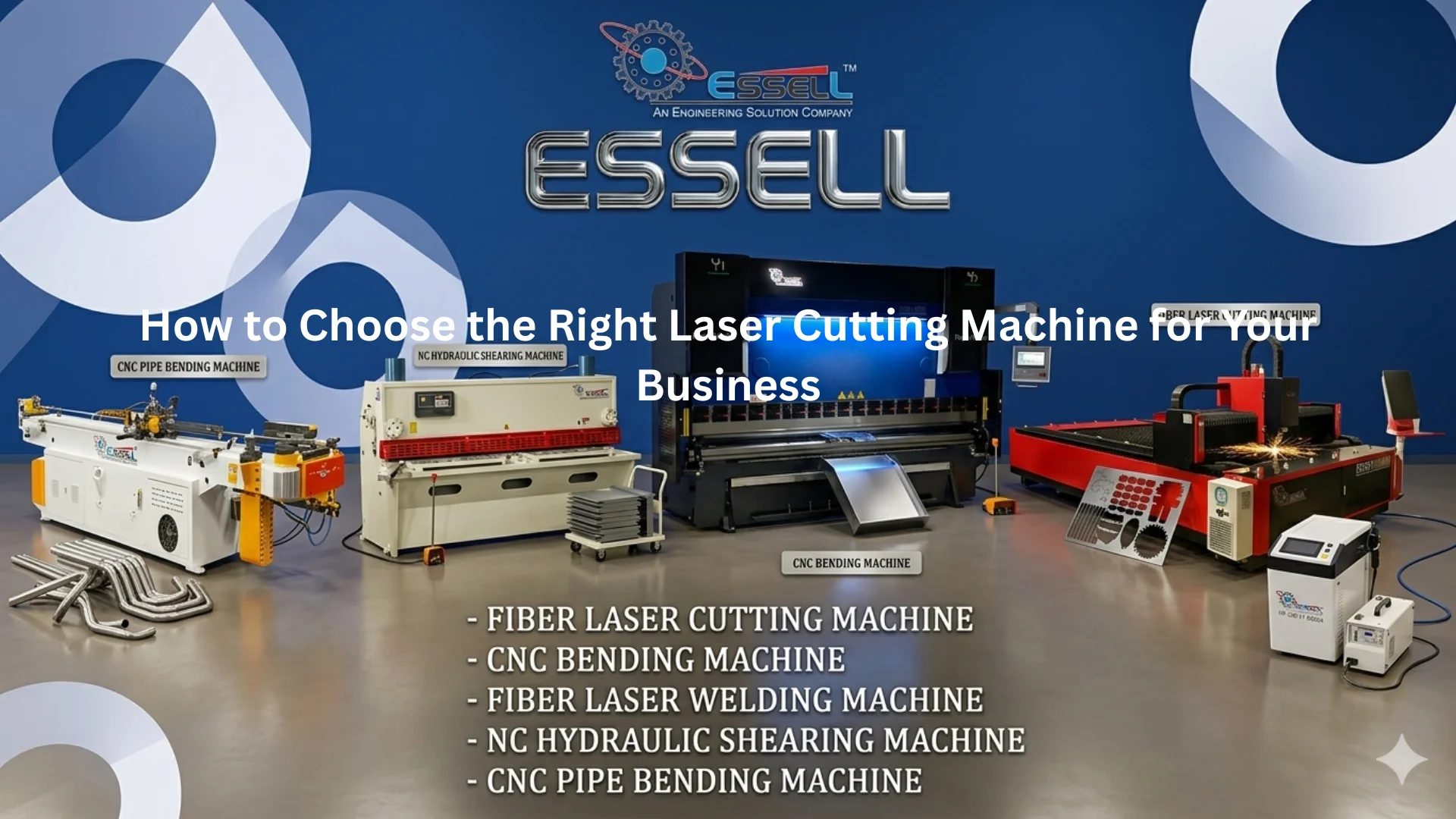
Why Businesses Choose Essell
At Essell, every recommendation begins with understanding the customer’s manufacturing objectives rather than simply suggesting a machine model. This application-focused approach allows businesses to invest in equipment that aligns with their production requirements and future plans.
Essell provides:
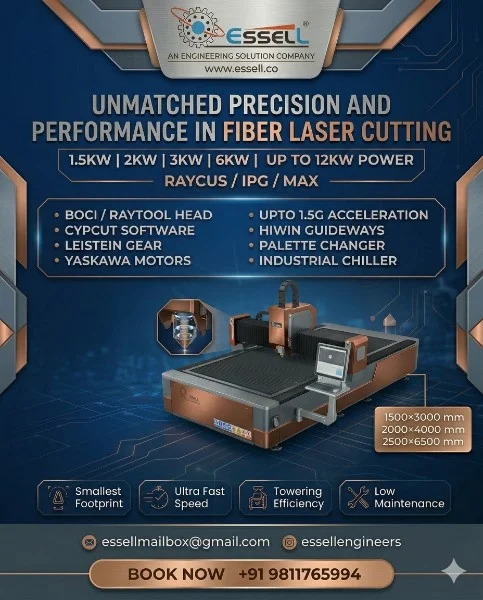
- precision-engineered laser cutting machines
- guidance based on production applications
- dependable machine performance
- operator training and technical assistance
- responsive after-sales support
- solutions designed for scalable manufacturing
By combining engineering expertise with practical industry experience, Essell helps manufacturers improve productivity, maintain consistent quality, and strengthen long-term operational performance.
Conclusion
Choosing the right laser cutting machine requires a complete understanding of your production goals, workflow, materials, growth plans, and operational priorities. The best investment is not necessarily the machine with the highest specifications, but the one that delivers consistent value within your manufacturing environment.
By carefully evaluating both equipment and supplier capabilities, businesses can build a production system that supports efficiency, precision, and sustainable growth. With advanced laser cutting solutions and dedicated technical support, Essell helps manufacturers make confident decisions that contribute to long-term business success.