

Top 10 tips for accurate pipe bending and fitting
Precision in pipe bending and fitting is essential for achieving strong, reliable, and visually consistent structures. Whether in construction, automotive, or industrial fabrication, even small inaccuracies can lead to misalignment, structural weakness, and costly rework.
Achieving high accuracy is not just about using advanced machinery—it also involves proper planning, correct techniques, and attention to detail. Here are the top 10 practical tips to help improve accuracy in pipe bending and fitting operations.
1. Understand material properties before bending.
Different materials respond differently to bending forces. Factors such as hardness, thickness, and elasticity influence how a pipe behaves during the process.
Knowing the material characteristics helps in selecting the right bending method and prevents issues like cracking or deformation.
2. Choose the correct bending method
Pipe bending can be performed using various techniques, including manual, hydraulic, and CNC-based methods.
selecting the appropriate method depends on:
- pipe diameter
- wall thickness
- required precision
- production volume
Using the right method ensures better control and improved results.
3. Maintain accurate measurements
Precision starts with accurate measurements. Incorrect dimensions can lead to poor fitting and alignment issues.
always double-check:
- pipe length
- bend angles
- centerline radius
Using reliable measuring tools helps reduce errors and improve overall accuracy.
4. Use proper tooling and equipment
The quality of tools directly affects bending accuracy. Worn-out or incorrect tooling can lead to inconsistent results.
ensure that:
- These match the pipe size.
- Tools are properly aligned.
- equipment is in good condition
This helps achieve smooth and precise bends.
5. Control bend radius carefully;
The bend radius plays a crucial role in determining the final shape of the pipe. An incorrect radius can cause distortion or flattening.
selecting the appropriate radius ensures:
- uniform bending
- Reduced stress on the material
- better structural integrity
6. minimize material deformation
During bending, pipes can experience issues such as wrinkling, thinning, or ovality. Controlling these factors is essential for accuracy.
This can be achieved by:
- using mandrels when required
- applying consistent force
- avoiding excessive pressure
These steps help maintain the original shape of the pipe.

7. Ensure proper alignment during fitting
Accurate fitting requires proper alignment of all components. Even a slight misalignment can affect the overall structure.
before final assembly:
- Check alignment points
- Verify joint positions
- ensure consistent spacing
This helps achieve a clean and precise fit.
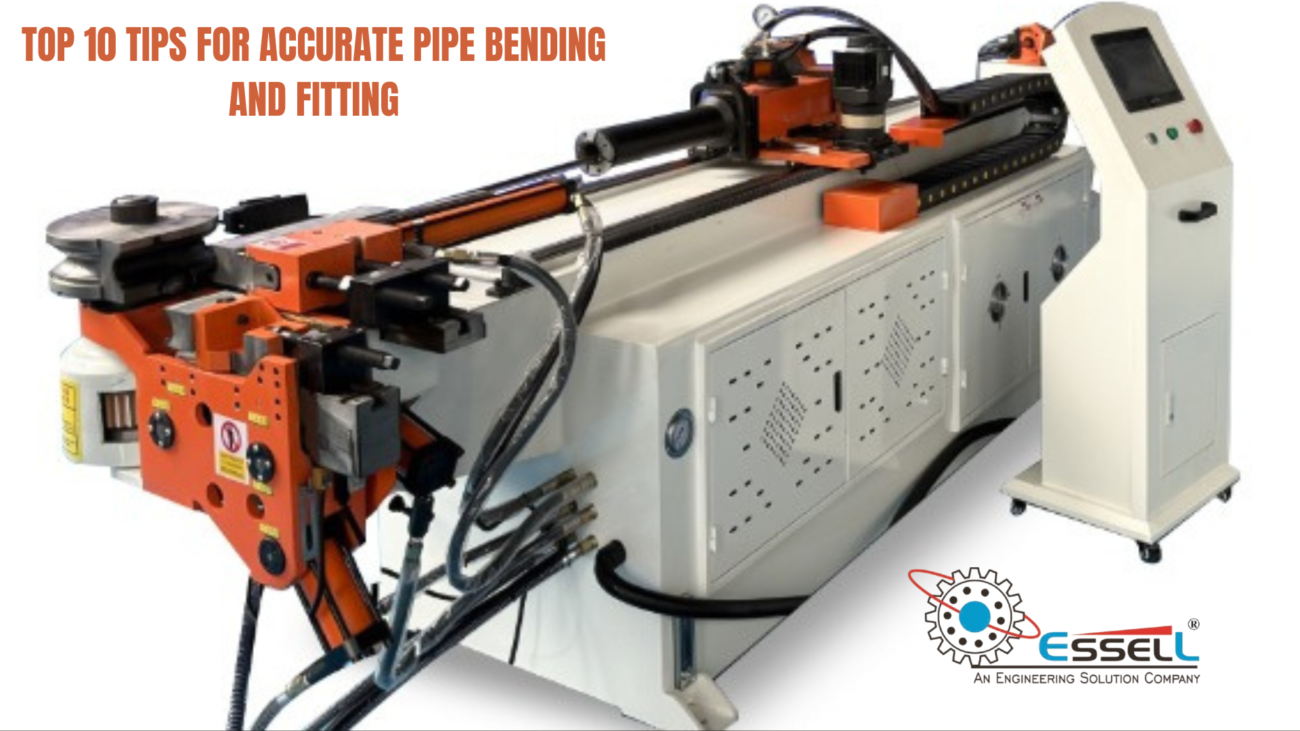
8. Use advanced CNC bending for high precision
For complex designs and high-volume production, CNC pipe-bending machines provide superior accuracy.
These systems offer:
- automated control
- repeatable results
- precise angle adjustments
CNC technology reduces human error and improves consistency.
9. Perform trial runs and testing
Before starting full production, conducting trial runs helps identify potential issues.
Testing allows you to:
- verify measurements
- Check bending accuracy
- Adjust machine settings
This step helps avoid costly mistakes during large-scale production.
10. regular maintenance of equipment
Well-maintained equipment ensures consistent performance and accurate results.
Maintenance should include:
- checking alignment
- inspecting tools
- cleaning machine components
Routine maintenance helps prevent unexpected errors and downtime.
common challenges in pipe bending and fitting
Even with proper techniques, certain challenges can arise during pipe bending.
These include:
- springback effect
- material cracking
- inconsistent bend angles
- fitting misalignment
Understanding these challenges helps in taking preventive measures and improving accuracy.
Role of modern technology in improving accuracy,
advanced technologies are transforming pipe bending and fitting processes. Modern machines are equipped with features that enhance precision and efficiency.
These include:
- automated bending programs
- real-time monitoring systems
- intelligent control interfaces
Such innovations help manufacturers achieve consistent and high-quality results.
Why Essell Solutions improves pipe bending accuracy
At Essell, advanced fabrication solutions are designed to deliver precision and reliability. essell focuses on providing equipment that meets the demands of modern manufacturing.
essell offers:
- advanced CNC bending technology
- robust machine construction
- high accuracy and repeatability
- efficient operation
- reliable after-sales support
By combining technical expertise with practical solutions, essell helps businesses improve accuracy and productivity.
conclusion
Accurate pipe bending and fitting are essential for achieving high-quality fabrication results. By following the right techniques, using proper equipment, and understanding material behavior, businesses can significantly improve their outcomes.
Implementing these top 10 tips helps reduce errors, improve efficiency, and ensure consistent results. With the support of advanced solutions from essell, achieving precision in pipe bending becomes easier and more reliable.